Happy soil, happy fruit
Who wins when fruit is grown the organic, regenerative way? Here's an easy-to-read summary of what ReCAP, a project that helped Nam Hom coconut farmers switch to regenerative organic farming, has to say about soil, water, bees, the climate, farmers and the people who eat the fruit.
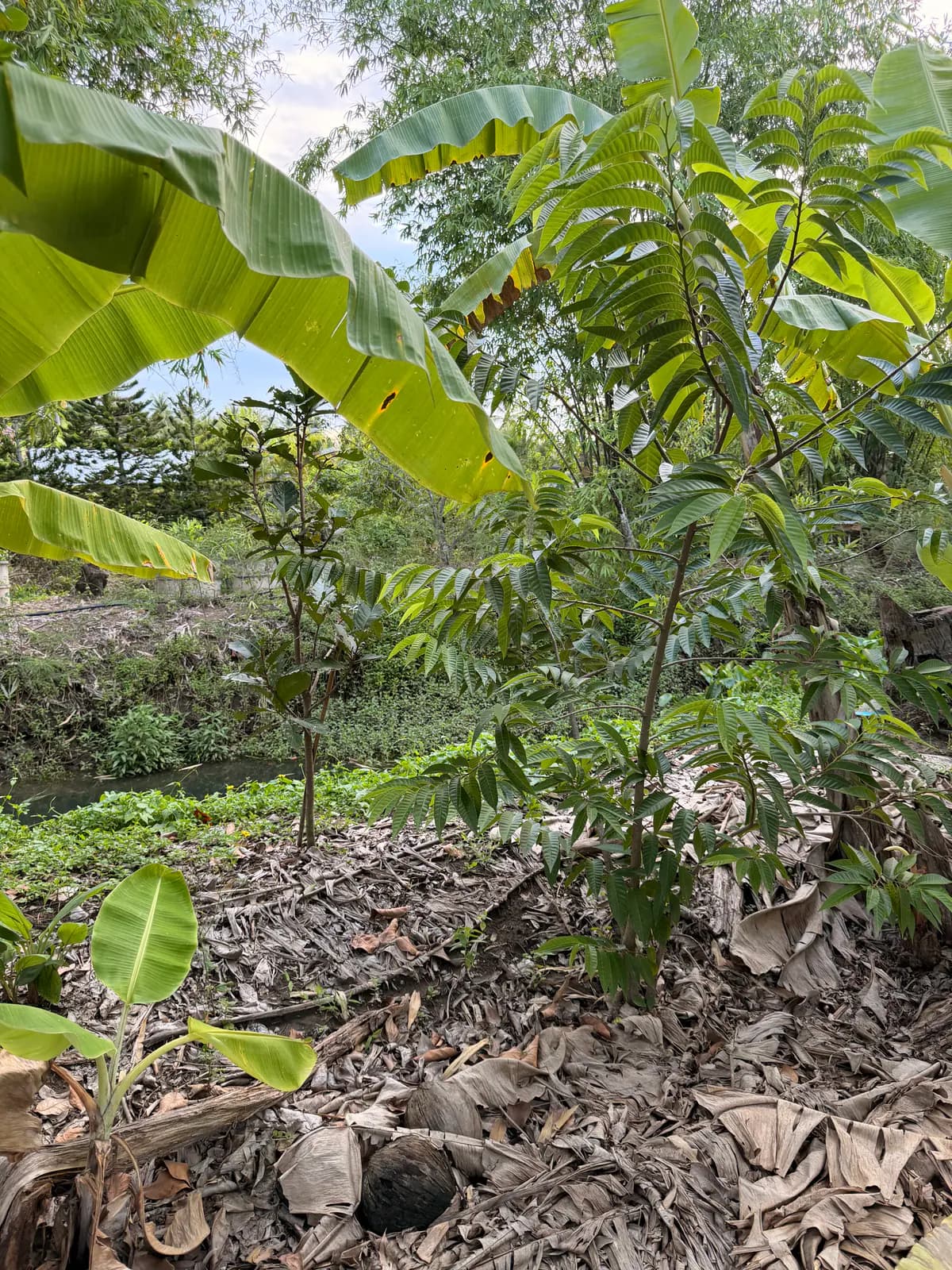
Organic and regenerative: what's the difference?
Organic farming means growing without synthetic fertilisers, insecticides, herbicides or growth regulators. Natural methods do the work instead: compost feeds the soil, and helpful insects keep pests in check.
Regenerative farming is all about results. It isn't only about "doing no harm"; it sets out to repair, so the soil gets richer, holds more organic matter and more life, and stores more carbon. On its own, though, it has no rule against pesticides, herbicides or synthetic fertilisers.
So ReCAP puts the two together and calls it regenerative organic agriculture: organic farming as the base, plus care for the soil, the whole ecosystem and fairness for the people who work the land. In the project's words, it's farming that restores the resources it uses instead of exhausting them.
Who's better off?
Soil that's alive
Good soil is full of tiny life, and it helps plants stay strong on their own.
Read more about Soil that's alive
Soil isn't just lifeless dirt. A single teaspoon of healthy soil can hold anywhere from a hundred million to a billion microbes: bacteria, fungi, algae and more. That's why ReCAP's handbook asks farmers to treat soil as a living ecosystem.
Compost and other organic fertilisers bring both nutrients and organic matter. As the handbook puts it, chemical fertilisers feed the plant, but organic fertilisers feed the soil. Too much chemical fertiliser and pesticide, or using them the wrong way, harms soil microbes and upsets nutrient cycling.
The handbook gives a real example from a coconut farm in Ratchaburi: soil under cover crops for 3 years had 4.05% organic matter, while bare soil on the same farm had only 2.48%.
Soil that holds water
Soil rich in organic matter soaks up the rain and stays moist through dry spells.
Read more about Soil that holds water
Healthy soil has a good crumbly structure with space for rain to sink in quickly and stay there for the roots. Soil low in organic matter seals over instead. The water pools on top and runs off, carrying topsoil and nutrients away with it.
Cover crops and a mulch of leaves around each tree slow evaporation, let more water soak in and cut the need for watering, so the orchard copes better with dry spells.
Skipping synthetic fertilisers and pesticides also means less chance of them getting into the soil, water and air. That matters even more in canal-orchard country, where canal water flows from one orchard to the next.
A home for bees and friends
Mixed planting and no chemical sprays turn an orchard into a home for bees, helpful insects and soil life.
Read more about A home for bees and friends
ReCAP recommends growing a mix of intercrops alongside coconuts, such as banana, papaya, pandan and pineapple. Different roots feed different soil life. Variety also breaks disease cycles and gives pollinators a place to live.
Stingless bees and Asian honeybees pollinate coconut flowers and help more fruit set. But bees are very sensitive to chemicals, which is why ReCAP's handbook calls them a good fit for organic farms.
Some insects are the farmer's helpers, like the tiny parasitoid wasps that keep the coconut black-headed caterpillar in check. The handbook's integrated pest management works by giving these natural enemies a chance instead of relying on chemicals.
A little help for the climate
Healthy soil stores carbon, and coconut leftovers become compost instead of smoke.
Read more about A little help for the climate
Farming is one of the big causes of climate change, and also one of the sectors hit hardest by it. ReCAP sees regenerative farming as a way to help on both fronts.
Soil holds roughly 3–4 times as much carbon as the atmosphere. Plants pull in carbon dioxide to make their food and pass some of it down into the soil through their roots. Disturbing the soil less and keeping it covered helps that carbon stay put.
The handbook reckons a coconut orchard produces about 4 tonnes of old fronds and discarded nuts per rai each year. Dumped in a canal, they rot without air and give off methane. Burned, they turn to smoke. So ReCAP developed three compost recipes made from coconut waste, letting farmers put it back into the orchard.
Better for farmers
No handling of farm chemicals, lower costs, and more than one way to earn.
Read more about Better for farmers
ReCAP's handbook is clear that farm chemicals are expensive and, over time, harmful to farmers' health and to the environment. Cutting out toxic synthetic inputs, it says, reduces the potential harm from exposure, both while working in the orchard and through food, air and water.
Cover crops keep weeds down without herbicides and save hours of weeding. The handbook points out that home-made coconut-waste compost costs far less than most compost on the market. Intercrops and honey from stingless bees mean income doesn't depend on coconuts alone.
By the end of the project, ReCAP reported that among its participating farmers, bee-keeping had gone up by 25%, use of organic compost by 17% and cover-crop planting by 15%.
Stronger farming communities
Farmers share know-how, tackle pests together and build new small businesses.
Read more about Stronger farming communities
ReCAP worked with Nam Hom coconut growers in four provinces. 449 farmers joined, covering 5,781 rai, and 8 demonstration plots were set up so that farmers, officials and the general public could come and learn.
Some coconut pests, like the black-headed caterpillar, need the whole community working together to keep them under control. One orchard on its own isn't enough.
The knowledge keeps travelling. Master trainers were trained to teach others, the plan was to hand the curriculum and compost-making equipment to local agricultural extension offices after the project, and four pilot farmers started their own compost businesses.
Peace of mind at the table
Fruit grown without synthetic pesticides or herbicides, from soil and ecosystems that are looked after.
Read more about Peace of mind at the table
Fruit grown this way is raised without synthetic insecticides, herbicides or fertilisers. ReCAP's handbook explains that cutting out toxic synthetic inputs reduces the potential harm from exposure through food, air, water and work.
The handbook also describes healthy soil as the heart of regenerative organic farming, with the aim of producing good-quality, nutrient-dense food while restoring the land. That's the handbook's stated goal, not a lab result for our own fruit.
Every time you choose fruit like this, you're helping look after the soil, the bees and the farmers too. Meet the fruit from our orchard
What do regenerative orchards do? (the ReCAP way)
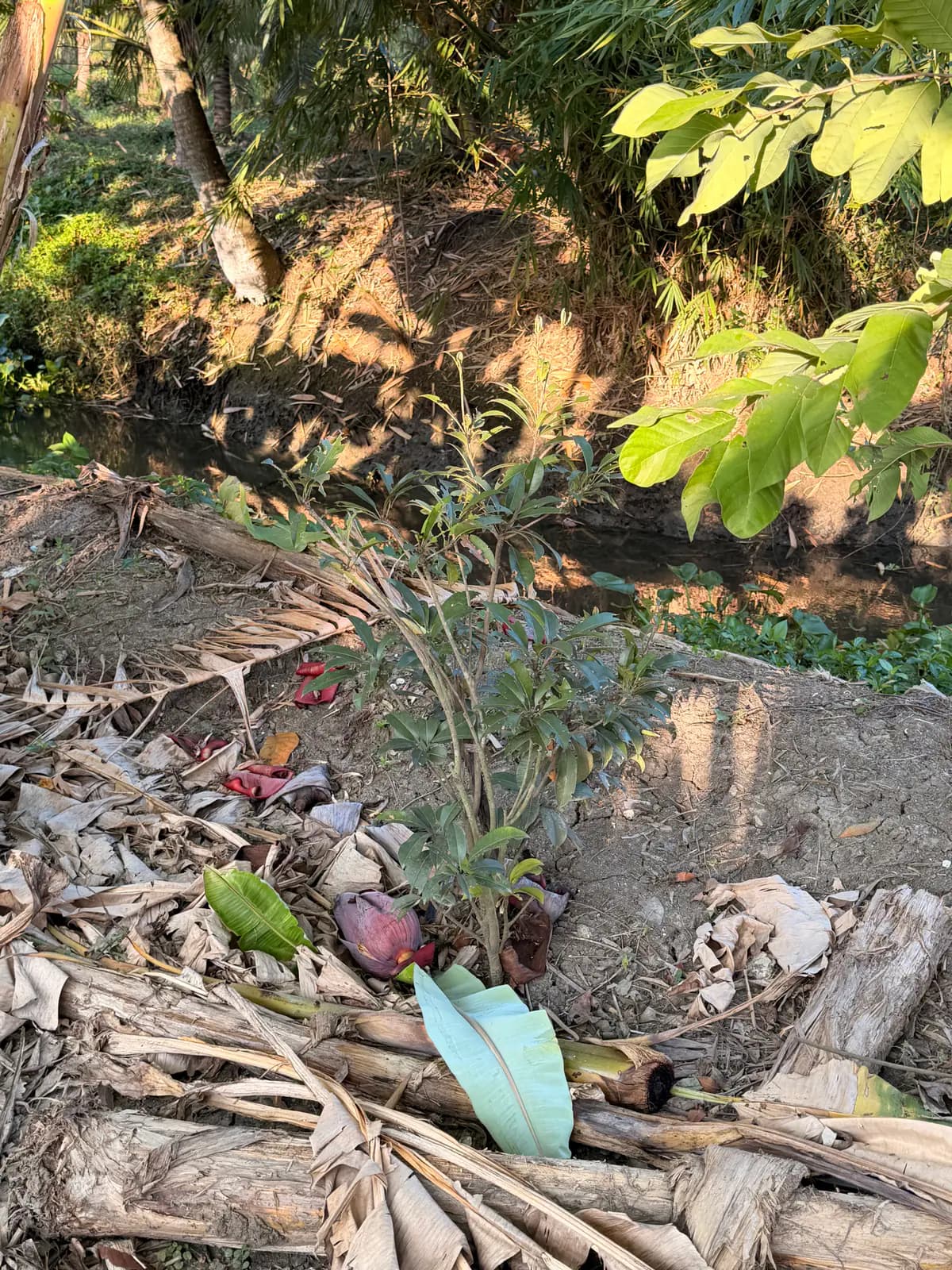
General guidance from ReCAP's handbook
Compost from orchard leftovers
Chop up coconut waste, leaves and plant scraps and compost them with manure. ReCAP has three coconut-waste compost recipes that take about 90 days. The handbook advises composting manure before use, because the heat of composting cuts down germs, weed seeds and smells.
Sources[1, p. 6][2, pp. 80–88]
Cover crops
Low plants such as roundleaf bindweed or pinto peanut carpet the ground. They cut erosion, hold moisture and keep weeds down without any herbicide, and legumes add nitrogen to the soil too. As ReCAP puts it, look closely at nature and you won't find bare soil; bare soil is something people made.
Leafy mulch
Cover the ground about 2 metres around each tree with fallen leaves, cut grass or other plant scraps. It keeps moisture in, stops the surface washing away, keeps the soil at a comfortable temperature for roots and microbes, holds back weeds and slowly breaks down into organic matter, all for free.
Sources[2, p. 71]
Intercropping and mixed planting
Grow two or more crops on the same land so light, nutrients and water are used well. ReCAP suggests choosing intercrops by the age of the coconut palms. In the first 3–4 years, while the palms are small, banana and papaya are among the suggested intercrops: bananas grow fast and give young palms shade and moisture. Later, shade-lovers like pandan or vegetable fern take over.
Sources[1, p. 8][2, pp. 64–69]
Natural pest management
Integrated pest management (IPM) replaces insecticide sprays: keep plants healthy, encourage natural enemies such as the parasitoid wasps that control black-headed caterpillars, use helpful fungi such as Metarhizium against rhinoceros beetles, set insect traps, keep the orchard tidy and walk the rows to check for pests regularly.
Sources[1, p. 7][2, pp. 118–147]
Stingless bees as pollinators
Keep boxes of stingless bees or Asian honeybees in the orchard to pollinate the coconut flowers. ReCAP's pilot farmers noticed fewer young coconuts falling off, plus there's honey as a bonus. The bees need flowers to feed on and a chemical-free orchard, because they're very sensitive to sprays.
Sources[1, p. 7][2, pp. 152–159]
Care for soil, water and edges
Plough less and keep heavy machinery off the soil. Don't dump coconut leaves in the canals, where they rot into methane; compost them or use them as mulch instead. And plant a windbreak around the orchard to protect it from contamination from neighbouring fields.
Sources[2, pp. 30, 34, 43, 54–55]
This part is about us
What Catherine Farm promises
Everything above is general guidance from the handbook. These are the rules our own orchard lives by, on the raised beds of Bang Khonthi.
- No herbicides
- No growth accelerators
- No chemicals — 100% organic inputs
- Diverse, mixed planting
- Regenerative farming
They describe how we farm. They're not an organic certification.
See our fruitAbout ReCAP
ReCAP, the Regenerative Coconuts Agriculture Project, started because world demand for Nam Hom coconuts shot up. To keep up, many growers turned to monoculture and heavy chemical use, which harmed the environment and put the livelihoods of farmers and farm workers at risk.
The project was implemented by GIZ, Germany's agency for international cooperation, together with Harmless Harvest Thailand. It was funded by the Danone Ecosystem Fund and Harmless Harvest, with Thailand's Department of Agriculture and Department of Agricultural Extension as partners.
ReCAP worked in four Nam Hom coconut provinces, including Samut Songkhram, where Catherine Farm is. Here, at the mouth of the Mae Klong, the river splits into more than 300 canals of fresh, brackish and salt water, a landscape known as the "Ecosystem of Three Waters".
ReCAP wanted its know-how to reach as many farmers as possible, so its learning materials are free for everyone. The farmer handbook comes in Thai and English. Download it here (opens in a new tab)
ReCAP at a glance
- Duration1 June 2020 – 31 August 2023
- ProvincesNakhon Pathom, Ratchaburi, Samut Sakhon, Samut Songkhram
- Implemented byGIZ and Harmless Harvest Thailand
- Funded byDanone Ecosystem Fund and Harmless Harvest
- PartnersDepartment of Agriculture and Department of Agricultural Extension
- 449 farmers joined, covering 5,781 rai
- 384 farmers completed at least 21 hours of training
- 3 coconut-waste compost recipes and 8 demonstration plots
- Soil organic matter on pilot farms improved by 1.15% within 28 months
All figures belong to the ReCAP project and its participating farmers, not to Catherine Farm.
Questions you might have
Is Catherine Farm certified organic?
This website doesn't claim any organic certification for the farm. What we describe is how we look after our own orchard: no herbicides, no growth accelerators, no chemicals, and diverse, mixed planting. This page is a general summary of ReCAP's material, not a certificate. Anything else you'd like to know? Just drop us a line.
Why does organic fruit sometimes look less than perfect?
Without synthetic insecticide or chemical sprays to keep the skin flawless, fruit may have a few spots or marks on the peel, and sizes vary. That's simply what fruit looks like when it grows at its own pace. ReCAP's handbook describes a tiny mite that leaves brown, cracked patches on the skin of coconuts, and it recommends dealing with it the natural way instead of spraying.
What does "regenerative" mean, in a nutshell?
Farming that doesn't just avoid harm but leaves the soil better than it found it. At its heart are the four soil-health principles in ReCAP's handbook: disturb the soil as little as possible, keep it covered, grow lots of different plants, and keep living roots in the ground all year.
Does organic mean there are no pests at all?
Not at all. Organic orchards have insects too. They use integrated pest management instead: healthy plants, natural enemies that eat the pests, and regular checks. The aim is to keep pests at a level the orchard can live with, not to wipe out every bug, because plenty of insects are the orchard's friends.
Is manure-based fertiliser on organic farms clean and safe?
ReCAP's handbook recommends composting manure before it goes on the orchard. The heat of composting cuts down germs, weed seeds and smells, and composting also helps keep contamination out of streams and groundwater. The US organic rules quoted in the handbook also say raw manure can only go on food crops if it's worked into the soil at least 90–120 days before harvest.
Did ReCAP write or check this page?
No. We wrote this summary ourselves from documents that ReCAP and GIZ published openly, and cited them throughout. It hasn't been reviewed or endorsed by GIZ, ReCAP or any of the project's partners. For the full story, download the handbook for free (opens in a new tab).
Sources
- 1Regenerative Coconut Agriculture — Brochure, Regenerative Coconuts Agriculture Project (ReCAP) (opens in a new tab)
ReCAP: GIZ, Harmless Harvest, Danone Ecosystem Fund, Department of Agriculture, Department of Agricultural Extension · 2023PDFEnglish
- 2Regenerative Organic Agriculture Training for Coconut Farmers — Handbook for Farmers (opens in a new tab)
ReCAP: GIZ, Harmless Harvest, Danone Ecosystem Fund, Department of Agriculture, Department of Agricultural Extension · 2023PDFEnglish
- 3การอบรมการฟื้นฟูด้วยเกษตรอินทรีย์สำหรับมะพร้าวน้ำหอมอย่างยั่งยืน — คู่มือเกษตรกร (opens in a new tab)
ReCAP: GIZ, Harmless Harvest, Danone Ecosystem Fund, กรมวิชาการเกษตร, กรมส่งเสริมการเกษตร · 2023PDFThai
- 4
- 5
- 6Regenerative Coconuts Agriculture Project (ReCAP) — project page (opens in a new tab)
GIZ Thailand (Thai-German Cooperation)Web pageEnglish
- 7Regenerative coconut agriculture helps to counter climate change (opens in a new tab)
GIZ Thailand (Thai-German Cooperation) · 2023Web pageEnglish
- 8Regenerative Farming: An opportunity to improve the livelihoods of coconut farmers (opens in a new tab)
GIZ Thailand (Thai-German Cooperation) · 2023Web pageEnglish
- 9Scaling up regenerative agriculture (opens in a new tab)
GIZ Thailand (Thai-German Cooperation) · 2022Web pageEnglish
- 10Harmless Harvest and GIZ: Partners for Sustainable Aromatic Coconuts (opens in a new tab)
GIZ Thailand (Thai-German Cooperation) · 2021Web pageEnglish
- 11Regenerative Coconuts Agriculture Project (ReCAP) — materials and videos (opens in a new tab)
Sustainable Agrifood System in ASEAN (asean-agrifood.org)Web pageThai / English